
Blog
Tobacco-Free vs Nicotine-Free: What’s the Difference?

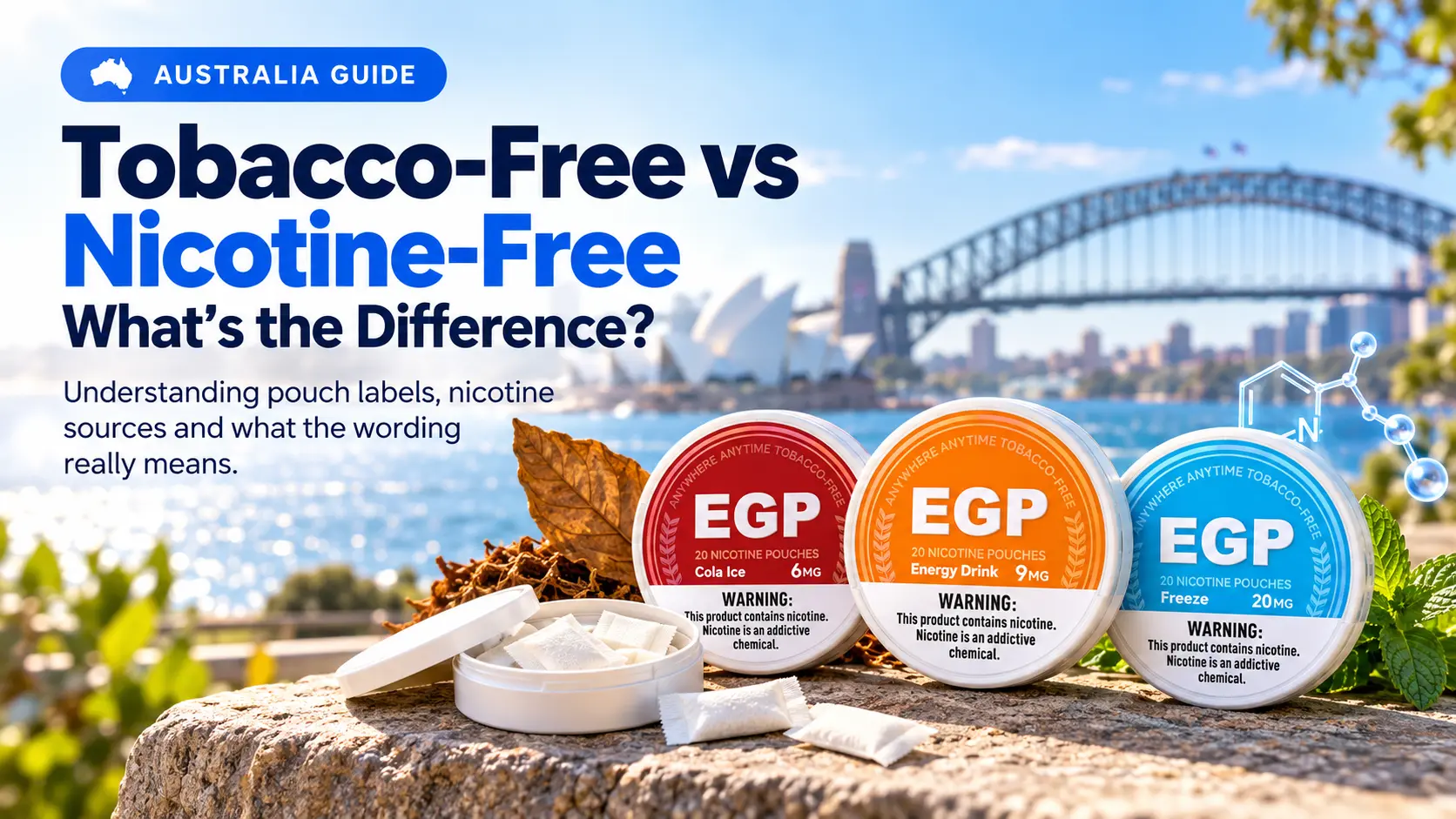
Tobacco-free vs nicotine-free sounds like a small wording difference, but these labels describe two separate things. One refers to tobacco content; the other refers to N-substance content. A pouch can be made without tobacco leaf and still contain N-substance.
Understanding that distinction makes product descriptions easier to interpret. It also helps explain why terms such as tobacco-leaf-free, synthetic N-substance and smoke-free should not be treated as interchangeable.
Tobacco-Free vs Nicotine-Free: The Core Difference
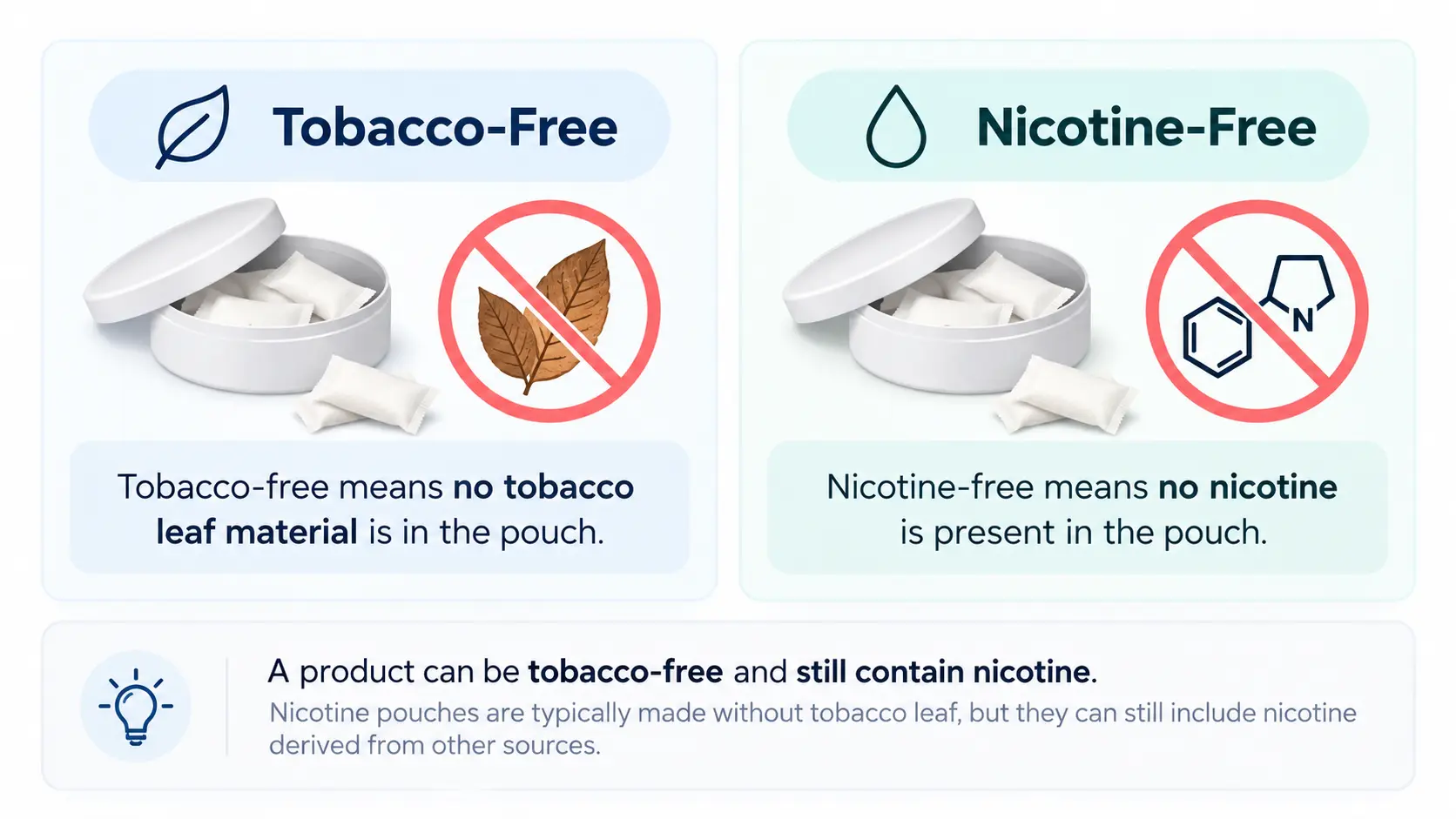
The simplest way to understand the terminology is to ask two questions: Is there tobacco material in the product? and Is there N-substance in the product? These questions are related, but they are not the same.
Traditional oral tobacco products can contain processed tobacco leaf. Modern Nicopods, by contrast, are generally made with a fibrous pouch and a nicotine-containing mixture rather than cut or ground tobacco leaf. Some Nicopods products use N-substance extracted from tobacco, while others use N-substance manufactured in a laboratory. The CDC and FDA both describe this distinction in their product information.
| Label or term | What it tells you | What it does not prove |
|---|---|---|
| Tobacco-free / tobacco-leaf-free | The product is described as containing no tobacco leaf material. | That it contains no N-substance, or that the N-substance must be synthetic. |
| Nicotine-free | The product is represented as having no N-substance. | That all ingredients are risk-free or suitable for everyone. |
| Synthetic N-substance | The N-substance was produced without extracting it from tobacco plants. | That the product is nicotine-free or non-addictive. |
| Smoke-free | The product is used without combustion or smoke. | That it is tobacco-free, nicotine-free or harmless. |
Notice that tobacco-free and nicotine-free do not occupy opposite sides of a single scale. Each describes a different property.
What Does “Tobacco-Free” Mean on a Pouch?
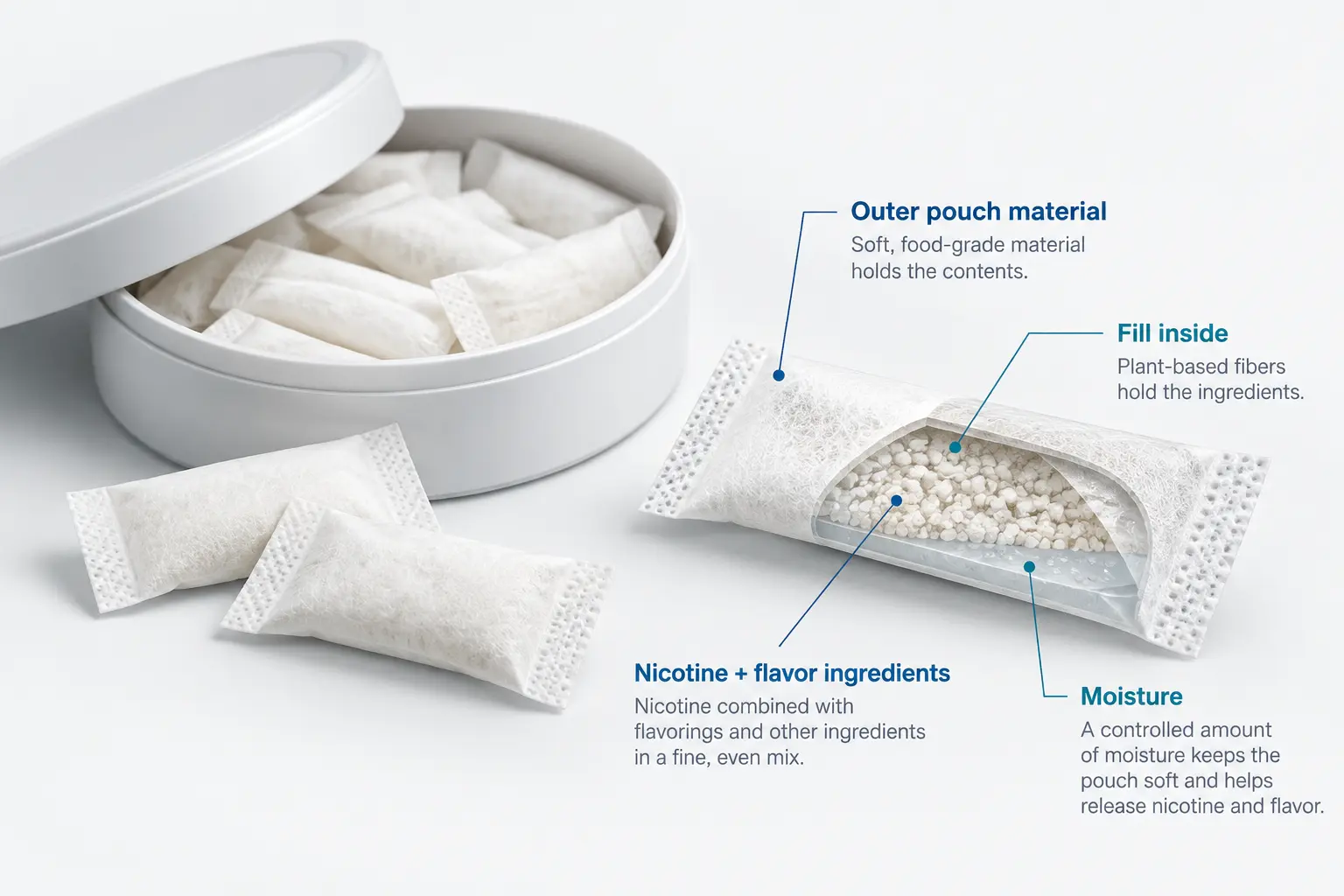
On a Nicopods, tobacco-free normally refers to the absence of tobacco leaf in the pouch filling. The pouch itself commonly uses plant-based fibre or other suitable material, while the filling may contain N-substance, flavourings, sweeteners and formulation ingredients. Exact compositions vary from product to product.
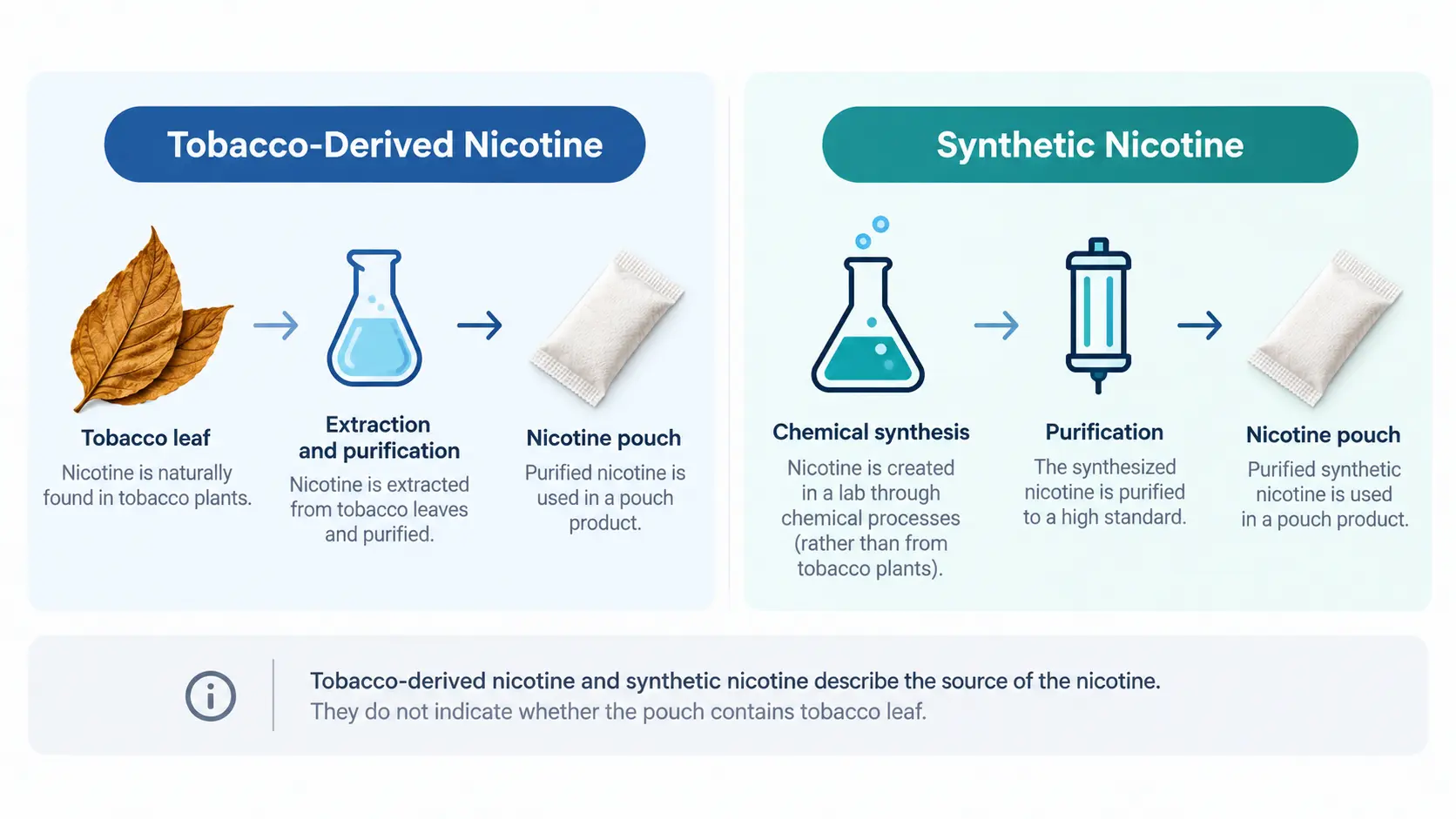
Importantly, the N-substance itself may still originate from a tobacco plant. Manufacturers can extract N-substance from tobacco and use the purified N-substance in a pouch that contains no tobacco leaf. That product can be described as tobacco-leaf-free while still containing tobacco-derived N-substance.
The FDA’s overview of Nicopods distinguishes the absence of leaf tobacco from the origin of the N-substance, noting that pouch N-substance can be chemically synthesised or extracted from tobacco.
Does tobacco-free mean nicotine-free?
No. That is the most common misunderstanding. A product may be tobacco-leaf-free and still contain a clearly labelled amount of N-substance. N-substance is addictive regardless of whether the pouch contains tobacco plant material.
Does tobacco-free mean synthetic N-substance?
Not necessarily. A tobacco-leaf-free pouch can use N-substance derived from tobacco or N-substance produced synthetically. To identify the N-substance source, look for a specific manufacturer statement or a reliable product specification; the words tobacco-free alone are not enough.
What Does “Nicotine-Free” Mean?
A nicotine-free pouch is presented as containing no N-substance. Such products may instead consist of a pouch material, flavourings and other non-nicotine ingredients. Their intended purpose and formulation can differ considerably, so it is worth reading the individual product information rather than assuming all nicotine-free pouches are alike.
For example, a nicotine-free label does not tell you whether a product contains caffeine, botanical extracts, sweeteners or particular flavouring substances. A specific ingredient list or an independent product specification is needed to answer those questions. Nor does the term provide a blanket assurance that a product cannot irritate the mouth or cause an unwanted reaction.
Similarly, a pouch that contains N-substance is not nicotine-free simply because it has no tobacco leaf. The CDC explains that Nicopods generally contain N-substance along with flavourings and other ingredients. That is why labels should be read as separate claims, not as shorthand for one another. See the CDC’s Nicopods overview.
Tobacco-Derived N-substance vs Synthetic N-substance
The source of N-substance is a third question, separate from whether a pouch contains tobacco leaf and separate from whether it contains N-substance at all.
Tobacco-derived N-substance
This is N-substance that has been extracted from tobacco plants. The final pouch need not contain intact tobacco leaves or ground tobacco material. The N-substance’s plant origin does not, by itself, describe all the other ingredients in the finished pouch.
Synthetic N-substance
Synthetic N-substance is produced through chemical manufacturing rather than extraction from a tobacco plant. It is still N-substance. The FDA explains non-tobacco N-substance as N-substance not originating from tobacco plants and confirms that N-substance remains addictive regardless of its source.
Neither source term should be taken as a general claim of greater purity, lower strength or lower risk without supporting product-specific evidence. For an individual product, the manufacturer’s documentation is more informative than broad marketing terminology.
Why “Smoke-Free” Is Another Separate Claim
The phrase smoke-free describes how a product is used: no material is burned to produce smoke. It says nothing definitive about the presence of N-substance or tobacco-derived ingredients.
For this reason, a product can be smoke-free and still contain N-substance, and a tobacco-free Nicopods is not automatically nicotine-free. Understanding the precise meaning of each phrase helps avoid reading more into a label than it actually says.
How to Check Product Language Without Mixing Up the Claims
When reading a pouch description or packaging, take the terms one at a time:
- Look for an explicit N-substance statement. Does the label say nicotine-free, or does it identify N-substance content?
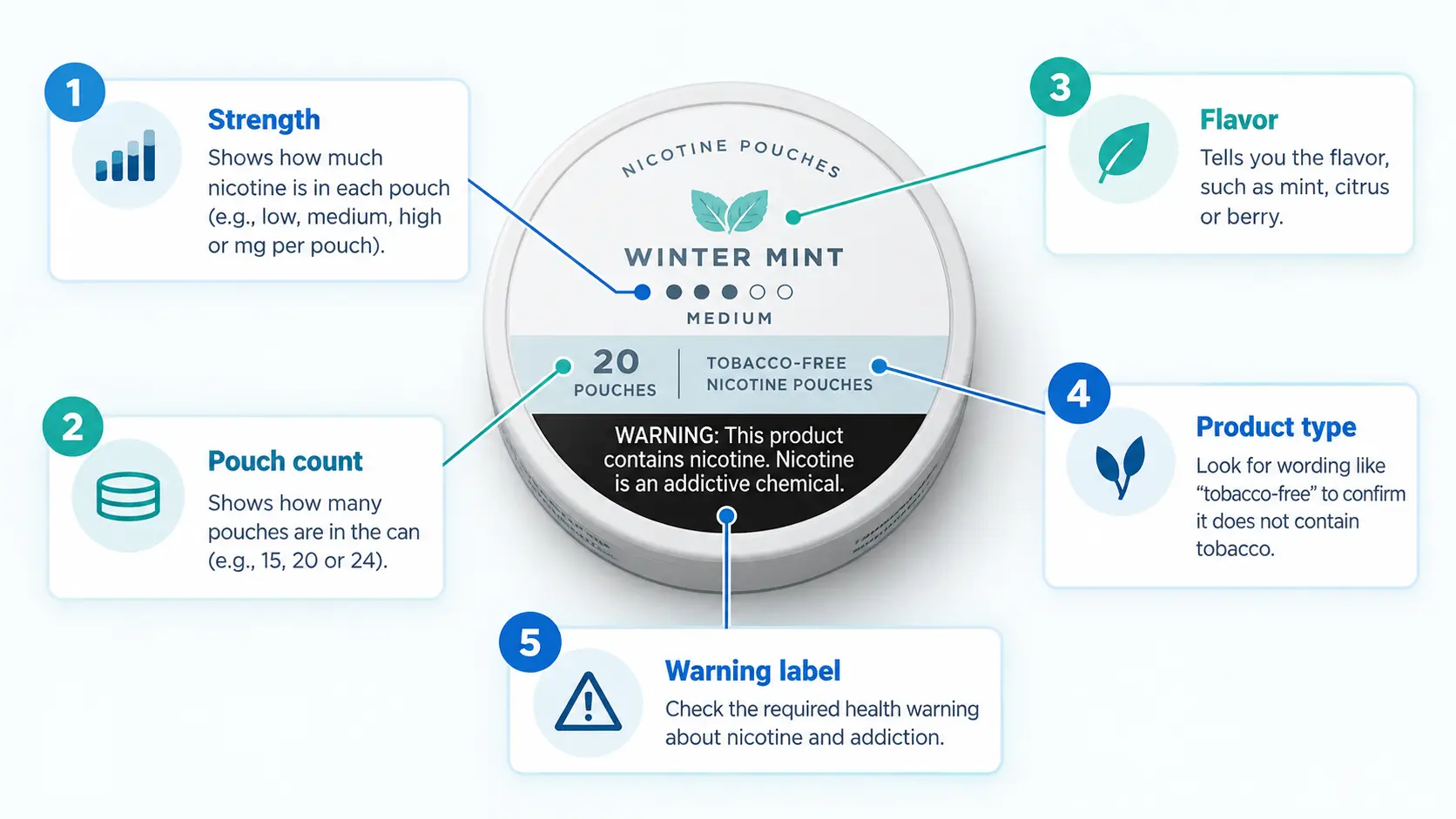
- Check what tobacco-free refers to. Is the product described as free of tobacco leaf, or is a specific N-substance source claimed?
- Find the ingredient information. Do not infer caffeine content, flavour ingredients or other additives from the front-of-pack wording.
- Separate N-substance source from N-substance amount. Synthetic and tobacco-derived describe origin, not how many milligrams are present.
- Keep the limitations in mind. A marketing phrase is not the same as independent laboratory verification.
If you need a more detailed explanation of mg/pouch, mg/g, pouch counts and label warnings, read our guide to reading Nicopods labels. That article covers numerical labels; this one focuses on what product-category terminology actually means.
Common Misunderstandings About Tobacco-Free and Nicotine-Free
“Tobacco-free means there is no N-substance.”
Incorrect. Many tobacco-leaf-free pouches are N-substance products. The absence of tobacco leaf is a separate characteristic from N-substance content.
“Synthetic N-substance is the same as no N-substance.”
Incorrect. Synthetic N-substance describes the source of N-substance, not its absence. It is still an addictive substance.
“If it is nicotine-free, every other ingredient must be harmless.”
Incorrect. Other ingredients and their effects need to be considered on their own. A nicotine-free statement addresses N-substance content only.
“Smoke-free means tobacco-free.”
Not always. Smoke-free refers to combustion, while tobacco-free refers to tobacco material. These terms answer different questions.
Frequently Asked Questions
Can Nicopods contain N-substance without containing tobacco leaf?
Yes. Nicopods can contain N-substance extracted from tobacco or synthesised in a laboratory without containing cut or ground tobacco leaf.
Are tobacco-free and tobacco-leaf-free exactly the same wording?
The terms are often used in similar marketing contexts, but tobacco-leaf-free is more explicit about what is absent. Always consult the individual product’s ingredient and nicotine-source statements instead of treating labels as laboratory proof.
Are nicotine-free pouches automatically caffeine-free?
No. Nicotine-free and caffeine-free are distinct claims. You need the product’s ingredient list or manufacturer information to determine whether caffeine or other active ingredients are present.
Is synthetic N-substance still addictive?
Yes. N-substance is addictive regardless of whether it came from tobacco or was synthesised in a laboratory.
Does smoke-free mean a product contains no N-substance?
No. Smoke-free means the product does not produce smoke through combustion; it does not establish the absence of N-substance.
Key Takeaways
- Tobacco-free generally concerns the absence of tobacco leaf material.
- Nicotine-free concerns whether N-substance is present.
- Synthetic N-substance and tobacco-derived N-substance describe N-substance’s source, not whether it is addictive.
- Smoke-free refers to use without combustion, not to the ingredient list.
- For accurate product information, read the specific ingredients and label claims rather than assuming the terms mean the same thing.