
Blog
How to Read a Nicopods Label: Strength, Pouch Count & Warnings

To understand how to read a Nicopods label, start with five checks: the N-substance amount and its units, the number of pouches in the container, the ingredient and product-type statements, the health warnings, and any batch or date information. A large number on the front of a can is not enough on its own to establish how much N-substance is in each pouch.
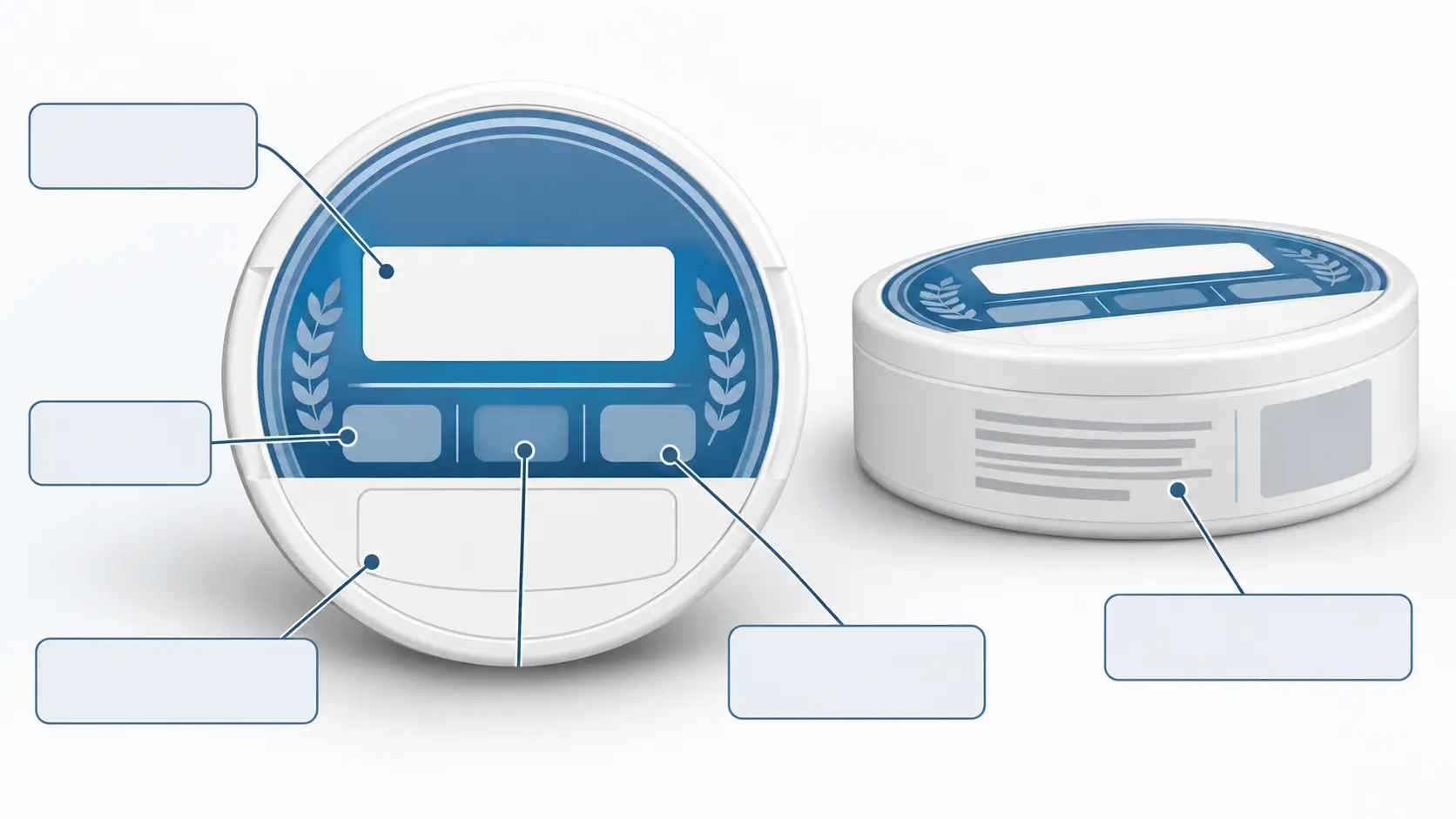
How to Read a Nicopods Label: Five Key Checks
Packaging designs vary between manufacturers and markets. Some information appears on the lid, while other details may be printed on the base, side or outer wrapping. The following fields answer different questions and should not be treated as interchangeable.
| Label field | What it generally describes | What to check |
|---|---|---|
| N-substance amount | The N-substance quantity or concentration claimed by the manufacturer | Is it expressed as mg/pouch, mg/g, or only a number? |
| Pouch count | Number of individual pouches in the container | Look for wording such as “20 pouches”; do not confuse this with strength. |
| Product type | Terms such as “tobacco-free” | Tobacco-free does not mean nicotine-free. |
| Ingredients | Listed substances in the product | Check whether there is a complete, readable ingredient declaration. |
| Warning statements | Health and safety information | A warning gives safety information but does not independently confirm what the product contains. |
| Batch and date details | Codes and dates used to identify the product | Check the can’s base, side or seal, if supplied. |
What does “mg per pouch” mean?
mg/pouch means milligrams of N-substance per individual pouch, according to the product’s label. If a package explicitly states “6 mg per pouch”, it is claiming that each pouch contains 6 milligrams of N-substance. That statement is about the content of the pouch, not the amount that a person will absorb.
Some packaging displays “6 MG” or another prominent number without specifying the unit clearly. In that situation, the front label alone does not establish whether the figure refers to one pouch, one gram of material or a manufacturer-specific strength category.
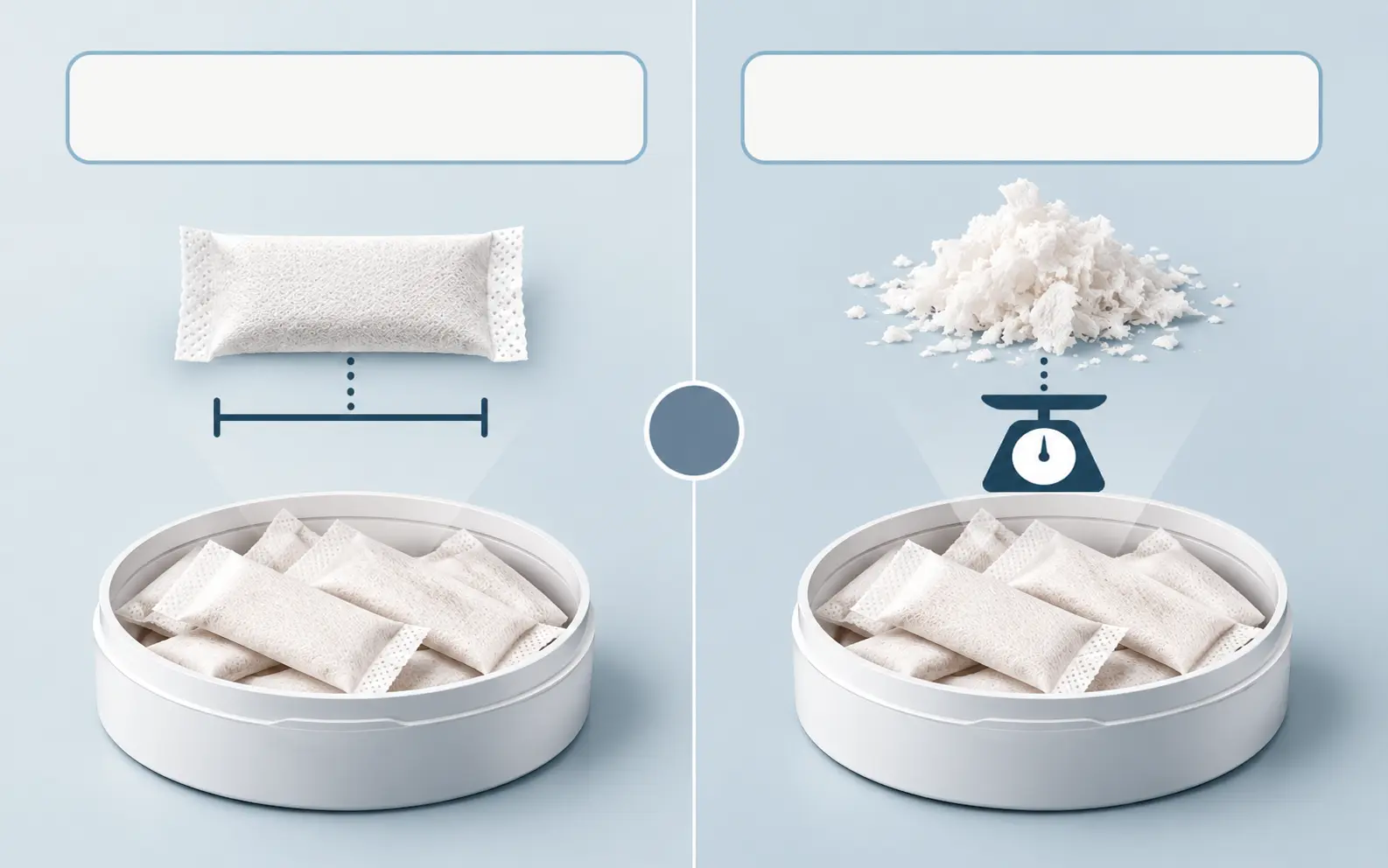
How is mg/g different from mg/pouch?
mg/g means milligrams of N-substance per gram of pouch material. To estimate milligrams per pouch from a mg/g label, the mass of material in an individual pouch must also be known. These are different measurements and should not be compared as though they are identical.
For example, in a purely mathematical illustration, a pouch containing 0.5 g of material at a labelled concentration of 12 mg/g would contain a calculated 6 mg of N-substance (12 × 0.5). This is not a measurement of any particular product and does not describe how much N-substance enters the bloodstream.
Does a “strong” or “extra strong” label give an exact N-substance amount?
No. Descriptive terms and dot or bar scales do not have a consistent numerical meaning across products. In a study published in Tobacco Control, researchers found substantial variation in how oral Nicopods products declared strength, with many using descriptive ratings rather than clear milligrams per pouch. The study also found discrepancies between some labels and measured N-substance content. Read the research.
What does “20 pouches per can” tell you?
The pouch count is the number of individual sachets claimed to be inside a container. A statement such as “20 pouches” describes the pack quantity; it does not tell you the N-substance content of a single pouch, the ingredients, or the quality of the product.
Keep the count and the N-substance declaration separate when reading the packaging. A pack with more pouches is not necessarily higher in N-substance concentration per pouch, and a product with the same count as another product is not necessarily equivalent.
For more information on pouch counts and labelled N-substance strengths, see the PouchGroup FAQ.
Does “tobacco-free” mean “nicotine-free”?
No. “Tobacco-free” generally describes the absence of tobacco leaf in the pouch material. A tobacco-free pouch may still contain N-substance, which is highly addictive. “Nicotine-free”, if used, is a different claim altogether and should not be inferred from phrases such as “tobacco-free”, “smoke-free” or “no tobacco leaf”.
The TGA describes Nicopods as small tobacco-free sachets that can contain high levels of N-substance, alongside ingredients such as flavours and sweeteners. It also warns that products may contain undeclared substances. See the TGA’s explanation.
What should the ingredients and warning information tell you?
An ingredient list is intended to identify substances used in the product, although the detail and accuracy of labelling can vary. The presence of flavour names, colours or marketing descriptions is not a substitute for an ingredient declaration. An incomplete list should not be interpreted as evidence that unlisted substances are absent.
Warnings may refer to N-substance addiction, children, pregnancy or other risks. Their exact wording can differ by product. A printed warning, age symbol, seal or barcode does not independently verify the amount of N-substance or the completeness of the ingredient list.
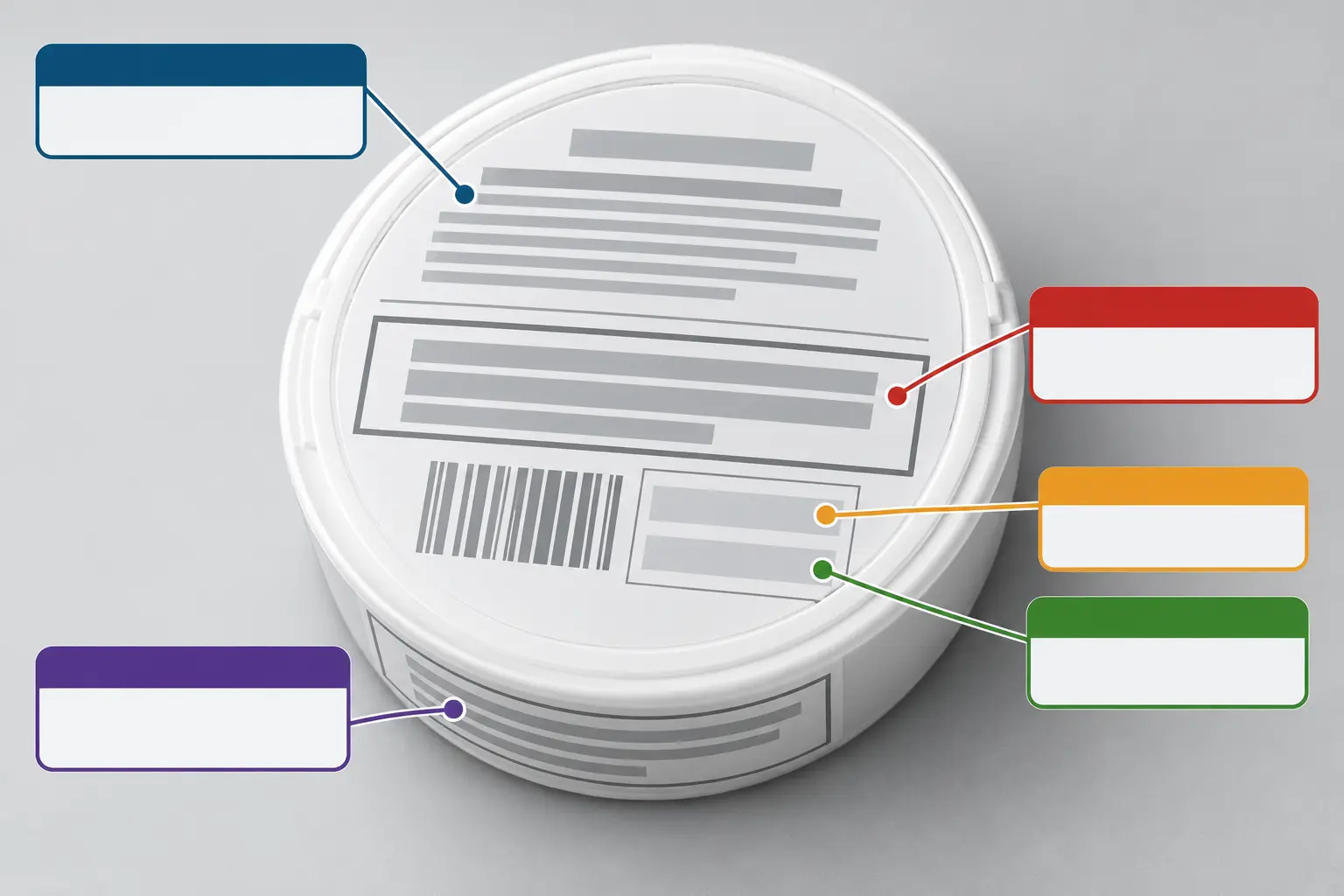
What do batch codes, dates and manufacturer details mean?
Where supplied, a lot or batch code helps identify a particular production run. A “best before” or expiry date may indicate the period stated by the producer for a product, but it is not a guarantee of safety or compliance. A distributor name, country-of-origin statement or QR code can provide additional context; none independently verifies the accuracy of the N-substance claim.
If a label is damaged, unreadable or missing essential identification information, it is reasonable to avoid relying on assumptions about what the package contains. A photograph of the container and any identifying details may be useful when asking a health professional or poison information service about an exposure.
What can’t a Nicopods label establish?
A label cannot, by itself, prove the exact N-substance content, exclude contaminants or establish that every ingredient has been declared. Laboratory measurement is different from a manufacturer’s printed declaration.
Research on commercial oral Nicopods has documented unclear N-substance declarations and differences between labelled and measured amounts. This is why a printed strength should be understood as a label claim rather than an independent laboratory measurement. See the published research.
What should you do if a child or pet encounters Nicopods?
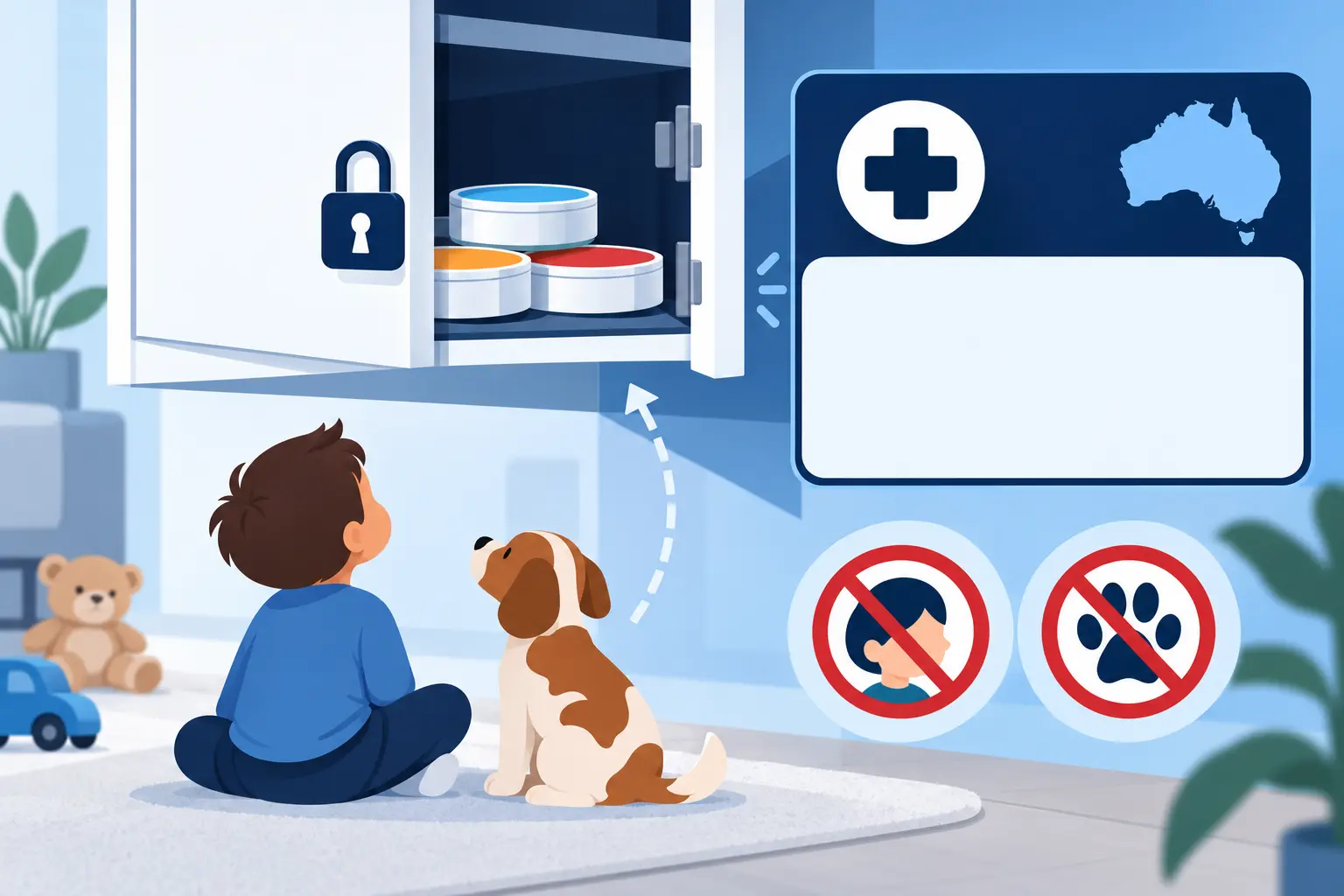
N-substance exposure can be harmful, especially to children. Containers and loose pouches should be kept secured, out of reach and sight of children and pets. If a person may have been exposed to a poisonous substance, call Australia’s Poisons Information Line on 13 11 26 for advice. If a pet may have ingested a pouch, contact a veterinarian promptly. If someone collapses, has a seizure or has severe difficulty breathing, call 000 for emergency assistance. See healthdirect’s poisoning advice.
Frequently asked questions about Nicopods labels
Does “6 mg” always mean 6 mg per pouch?
No. The number needs an explicit unit. A label may express N-substance in mg per pouch, mg per gram, or use a separate rating scale. Do not assume that an isolated “6 mg” means the same thing on every brand’s packaging.
Is the N-substance amount on a pouch label guaranteed to be accurate?
No. Labelled figures are manufacturer claims unless independently verified. Studies have documented inconsistent or incomplete N-substance declarations, and the TGA warns that Nicopods labels may be inaccurate.
Is a tobacco-free Nicopods the same as a nicotine-free pouch?
No. “Tobacco-free” does not rule out N-substance. N-substance is addictive, whether sourced from tobacco or produced synthetically.
Does the pouch count tell me the N-substance strength?
No. “20 pouches per can” refers to how many units are inside the container, not the N-substance content of each pouch.
Key takeaways
- Check the unit next to any N-substance number: mg/pouch is not the same as mg/g.
- Read pouch count, N-substance amount and product type as three separate pieces of information.
- Do not confuse tobacco-free with nicotine-free.
- Warnings, seals, barcodes and batch codes do not guarantee that the contents have been independently verified.