
Blog
Nicopods and Oral Health: What Does Research Say?

Nicopods and oral health are increasingly discussed together because a pouch sits directly against the gums and the lining of the mouth. Some people report local irritation, soreness or changes in the tissue where a pouch rests. Researchers have also begun examining possible effects on the gums, oral mucosa and teeth. However, the evidence is still developing, and it does not support a simple claim that every pouch causes the same harm—or that tobacco-free means harmless.
This guide explains what has been observed in studies, where important questions remain unanswered, and which changes warrant a dental assessment. It focuses on oral health rather than product strength, packaging terminology or storage.
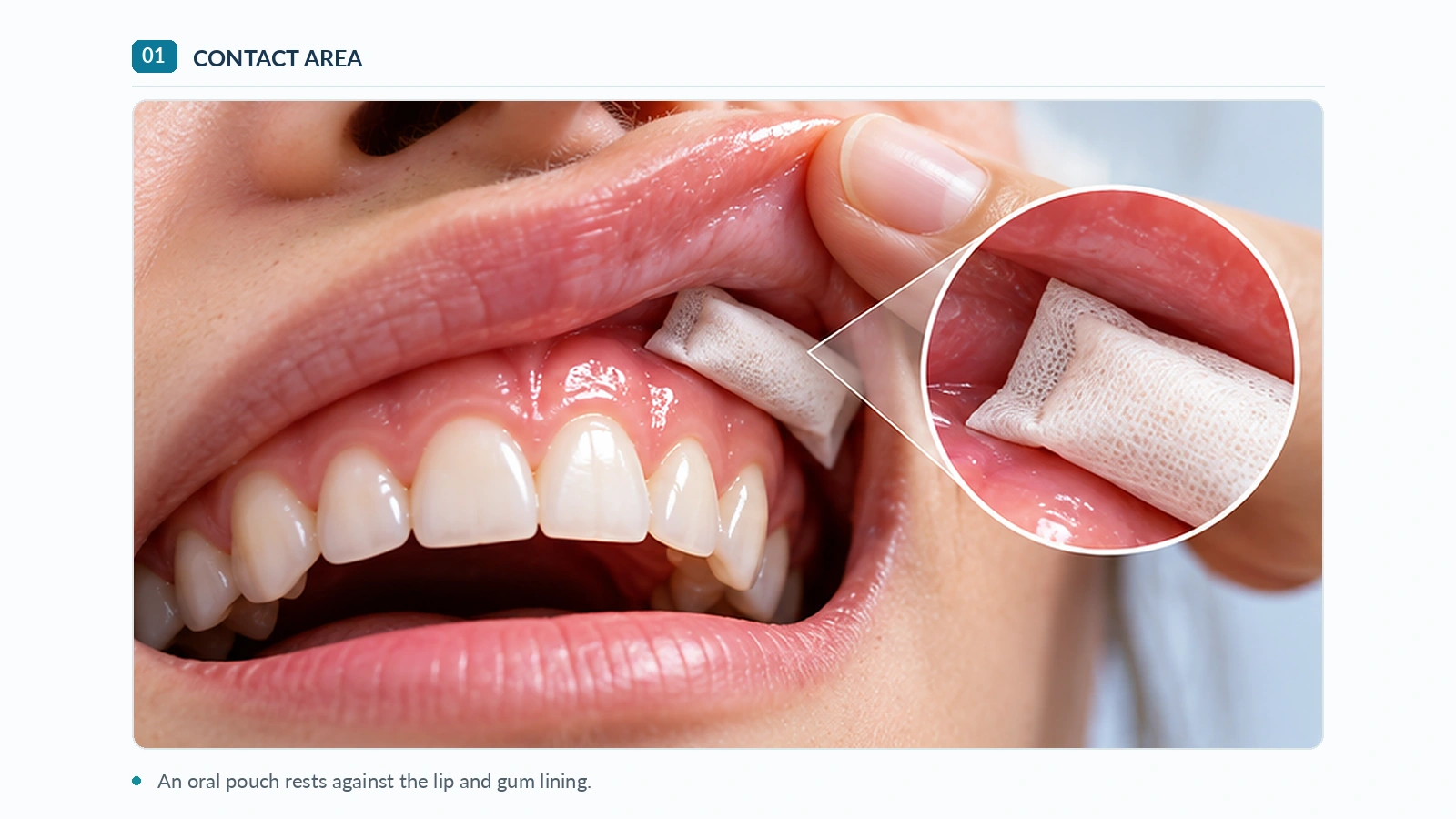
Why Might Nicopods Affect the Mouth?
Unlike inhaled products, an oral Nicopods is kept in direct contact with the inside of the lip and gum. N-substance and other dissolved ingredients can reach the oral lining, while the pouch material itself touches the tissue. This combination makes the contact area an obvious place for researchers and clinicians to look for changes.
The US Centers for Disease Control and Prevention (CDC) explains that N-substance is absorbed through the gums and lining of the mouth. This describes how the product works; it does not establish that the product is safe for oral tissue over months or years.
Contact with the oral lining
The oral mucosa is the soft tissue inside the mouth. Repeated contact with any substance or material may be relevant when a sore, pale area or patch develops in a consistent location. Clinical assessment matters because similar-looking changes can have many causes, including accidental biting, dental appliances, infection and other conditions.
Ingredients and individual responses
Nicopods can contain N-substance, flavourings, sweeteners and other ingredients. Formulations differ between products. Current studies do not reliably isolate which ingredient or combination is responsible for every reported symptom. A sensation described as “tingling” is not a reliable measure of either N-substance content or tissue safety.
What Does Research Say About Nicopods and Oral Health?
The most useful way to read this research is to separate what was observed from what the study design can prove. Short follow-up periods, small participant groups and differences between products make broad conclusions difficult.
A 2024 systematic review found evidence gaps
A 2024 systematic review in BMC Oral Health identified just three eligible studies involving a combined 190 participants. The reviewers considered all three studies at high risk of bias. They reported oral mucosal changes at pouch placement sites, along with symptoms such as dry mouth and soreness. Those findings support taking local symptoms seriously, but do not quantify a reliable long-term risk for all users.
A 2026 clinic study observed tissue changes
A 2026 cross-sectional study compared 126 Nicopods users, 63 users of oral tobacco-derived pouches and 83 non-users attending Swedish dental clinics. Oral lesions were observed in a substantial proportion of pouch users, with redness and self-reported symptoms among the findings. Because researchers examined participants at one point in time, the study cannot by itself prove what caused each lesion or predict future disease.
Short-term studies do not settle long-term questions
Other clinical research has examined people switching from cigarettes or Swedish snus to Nicopods. Some short-term measures have improved in those particular comparison groups, but that is not the same as showing that Nicopods are harmless to people who would otherwise use no N-substance product. Study populations, prior exposures and follow-up periods all matter.

Can Nicopods Irritate the Gums or Cause Mouth Sores?
Mouth irritation is among the more consistently reported concerns. Findings described in the research include redness, soreness, white or wrinkled areas and other changes to the lining near the pouch placement site. A patch or sore may be related to pouch contact, but it cannot be diagnosed from a description or photograph alone.
A sore spot is not a good reason to keep exposing that area to a product. If an unusual change appears, stop placing any product against the affected tissue and seek professional advice, particularly when symptoms persist or recur. A dentist can assess whether the issue may be due to irritation, trauma or a different cause.
What about dry mouth?
Dry mouth has been reported in some Nicopods studies, but it is also common for reasons unrelated to pouches. Medicines, dehydration, mouth breathing and health conditions can contribute. Ongoing dryness deserves attention because saliva helps protect oral tissues and teeth. A dental professional can assess symptoms in context rather than assigning them to one factor automatically.
Do Nicopods Cause Gum Recession?
The available evidence does not allow a confident answer that Nicopods directly cause gum recession at a particular rate. Gingival recession means that the gum margin has moved away from its usual position, exposing more of the tooth or root. It can have multiple contributing factors, including periodontal disease, brushing trauma, anatomy and other exposures.
Some investigations include gum recession among the outcomes they observe, but data remain too limited to establish causality or compare risk across strengths, flavours and use patterns. Be cautious of articles that convert a possible association into a firm prediction such as “pouches always recede your gums” or “no tobacco leaf means no gum risk”. Neither is supported by the current evidence.
If a tooth looks longer than before, a root surface becomes newly exposed, or gums bleed repeatedly, arrange a dental examination. The clinical question is what is happening in that particular mouth, not whether a generic online claim fits.
What About Tooth Decay, Staining and Periodontal Disease?
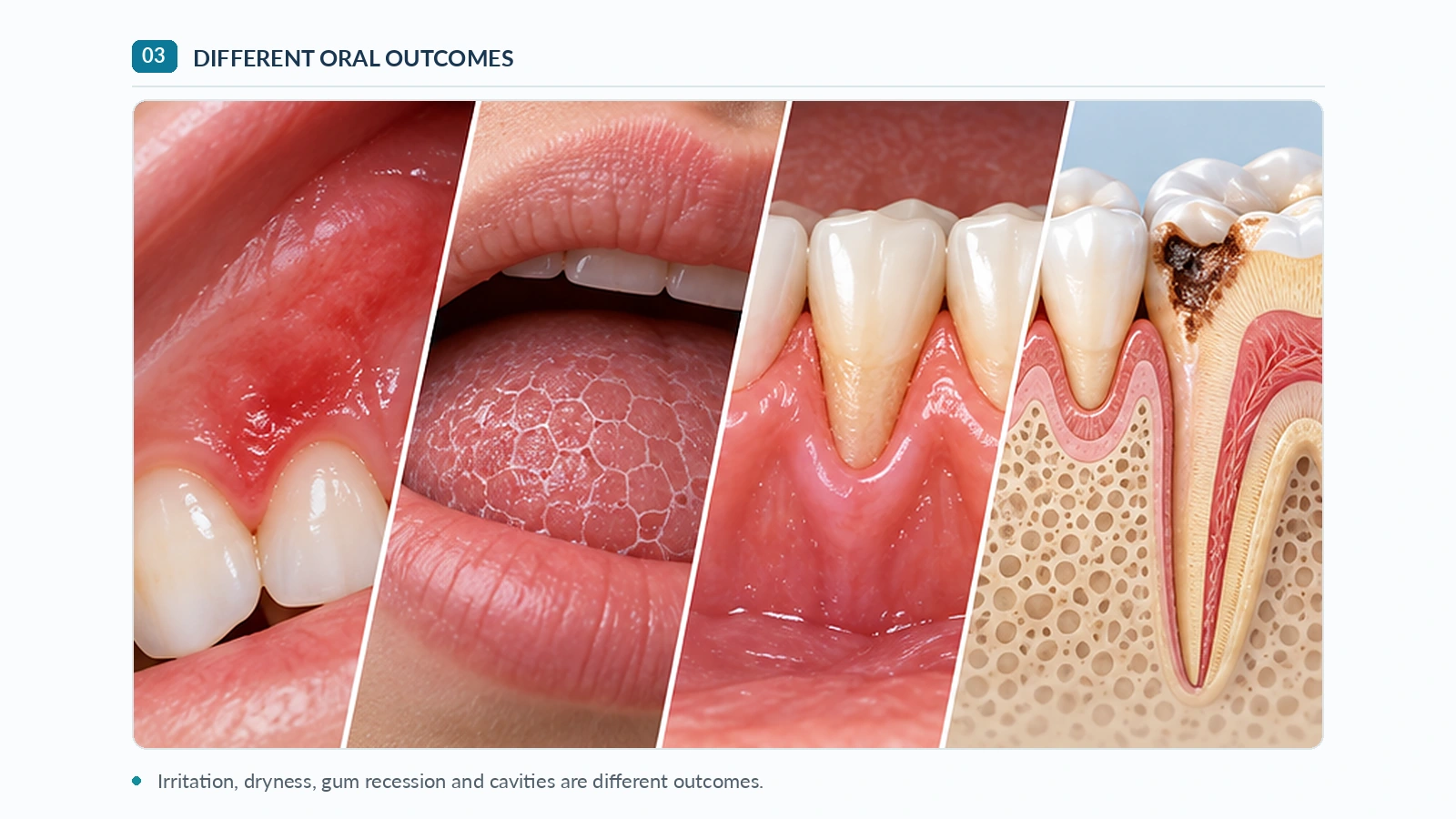
These are different outcomes and should not be grouped under a vague phrase like “bad for teeth”. Tooth decay involves damage to tooth structure. Staining describes a change in colour. Periodontal disease affects the supporting tissues around teeth. Mouth-lining lesions are something else again.
The 2026 Swedish clinic study did not observe a higher risk of caries or periodontal disease in its assessed participants with up to six years of reported use. That result is worth noting, but it is not proof of no risk for every formulation or over longer periods. The study was observational, involved a defined age group and could not control every factor.
It would also be inaccurate to say that every Nicopods stains teeth, prevents cavities or protects gums. For those claims, researchers would need more robust, product-specific and longer-term evidence than is currently available.
How Can You Tell When a Mouth Change Needs Professional Attention?
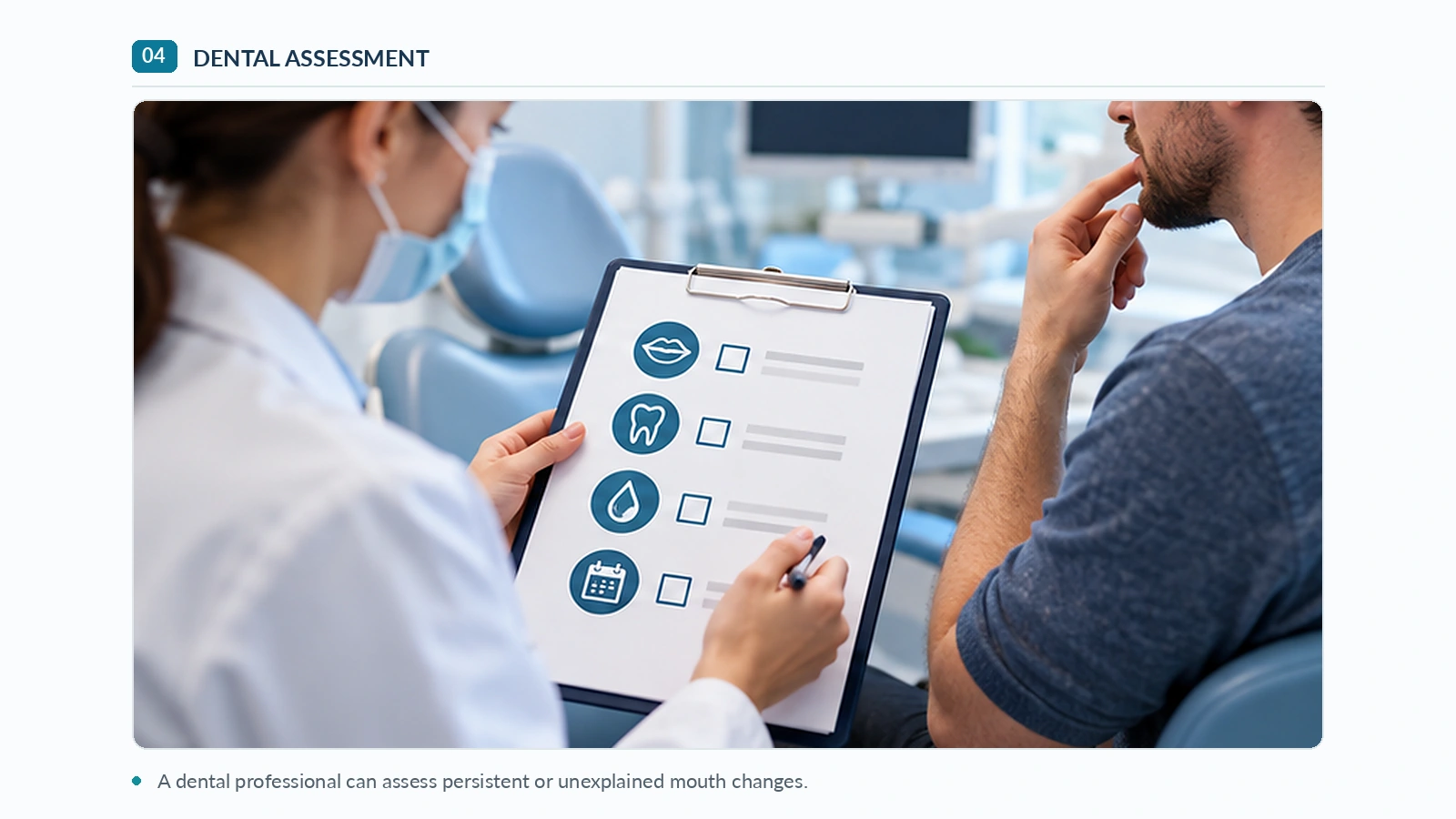
Most mouth ulcers have many possible causes, and many settle within a week or two. However, an unexplained lesion should not be ignored simply because it appeared around the time a pouch was used. Healthdirect Australia recommends seeing a doctor if a mouth ulcer lasts longer than two weeks, is very painful or repeatedly returns. A dentist can also examine oral soft tissues and gum health.
Seek a dental or medical assessment for changes such as:
- A sore or ulcer that does not heal within two weeks.
- Persistent white, red or unusual patches inside the mouth.
- Repeated bleeding, swelling or gum tenderness.
- New gum recession, exposed roots or sensitivity.
- Pain that makes eating, drinking or cleaning teeth difficult.
If symptoms are severe or rapidly worsening, seek prompt medical care rather than waiting for a routine dental appointment. Mention all relevant exposures and any products that have been in contact with the affected area.
How to Read Oral Health Claims About Nicopods
A headline may say a product is “safer”, “better for gums” or “proven harmless” while the underlying study measured only one short-term outcome in a selected group. Ask whether the article distinguishes mouth irritation from periodontal disease, identifies the comparison group and describes the study duration.
Three questions help when evaluating a claim: Was the outcome observed or self-reported? Was there an appropriate comparison group? How long were participants followed? An improvement after switching from smoking or snus may be relevant to that group without establishing safety compared with never using N-substance.
Packaging language can also be misunderstood. “Tobacco-free” describes the absence of tobacco leaf in the pouch; it does not mean nicotine-free or imply an oral health guarantee. For help interpreting strength and product-type wording, see our separate guide to reading a Nicopods label.
Frequently Asked Questions About Nicopods and Oral Health
Are Nicopods bad for your gums?
They may be associated with local irritation and changes to oral tissue in some users. Evidence about long-term gum disease and recession is more limited, so individual outcomes should not be assumed from broad claims.
Can Nicopods cause mouth ulcers?
Mouth soreness and lesions have been reported in observational research, but not every ulcer has the same cause. Persistent or recurrent ulcers should be examined by a dentist or doctor.
Do Nicopods cause gum recession?
A direct causal relationship has not been established by the available evidence. Recession has several possible causes, and a dental examination is needed to assess it.
Do Nicopods damage teeth or cause cavities?
Current research does not establish a consistent causal increase in tooth decay across Nicopods users. That is not the same as proof that all products are harmless to teeth or gums.
How long should a mouth sore be left before seeking advice?
According to Healthdirect Australia, a mouth ulcer lasting longer than two weeks, returning frequently or causing significant pain should be assessed by a health professional.
Key Takeaways
- Nicopods contact the oral lining directly, making local tissue changes an important research topic.
- Clinical reports describe irritation, soreness and mucosal lesions in some users.
- Evidence about gum recession, cavities and long-term dental outcomes remains limited.
- Study design and comparison groups matter when interpreting claims of benefit or harm.
- Persistent mouth lesions, recurring bleeding or new gum changes deserve professional assessment.